Crate training can help some dogs feel secure, but it can make distress worse for others. The key question in crate training separation anxiety is not whether crates are inherently good or bad—it is how the individual dog feels about confinement. A dog who voluntarily rests and sleeps in a crate may tolerate it well, while a dog experiencing separation-related distress or confinement anxiety may panic, attempt to escape, and even injure themselves. A crate should never be used to force a frightened dog to endure an absence.
It is also important to separate three different situations: a dog who genuinely feels safe in a crate, a dog who becomes distressed because a person leaves, and a dog who becomes distressed specifically because a barrier prevents movement. Those problems can overlap, but they are not always the same.
Does Crate Training Help Separation Anxiety?
Sometimes—but crate training itself is not a treatment or cure for separation anxiety.
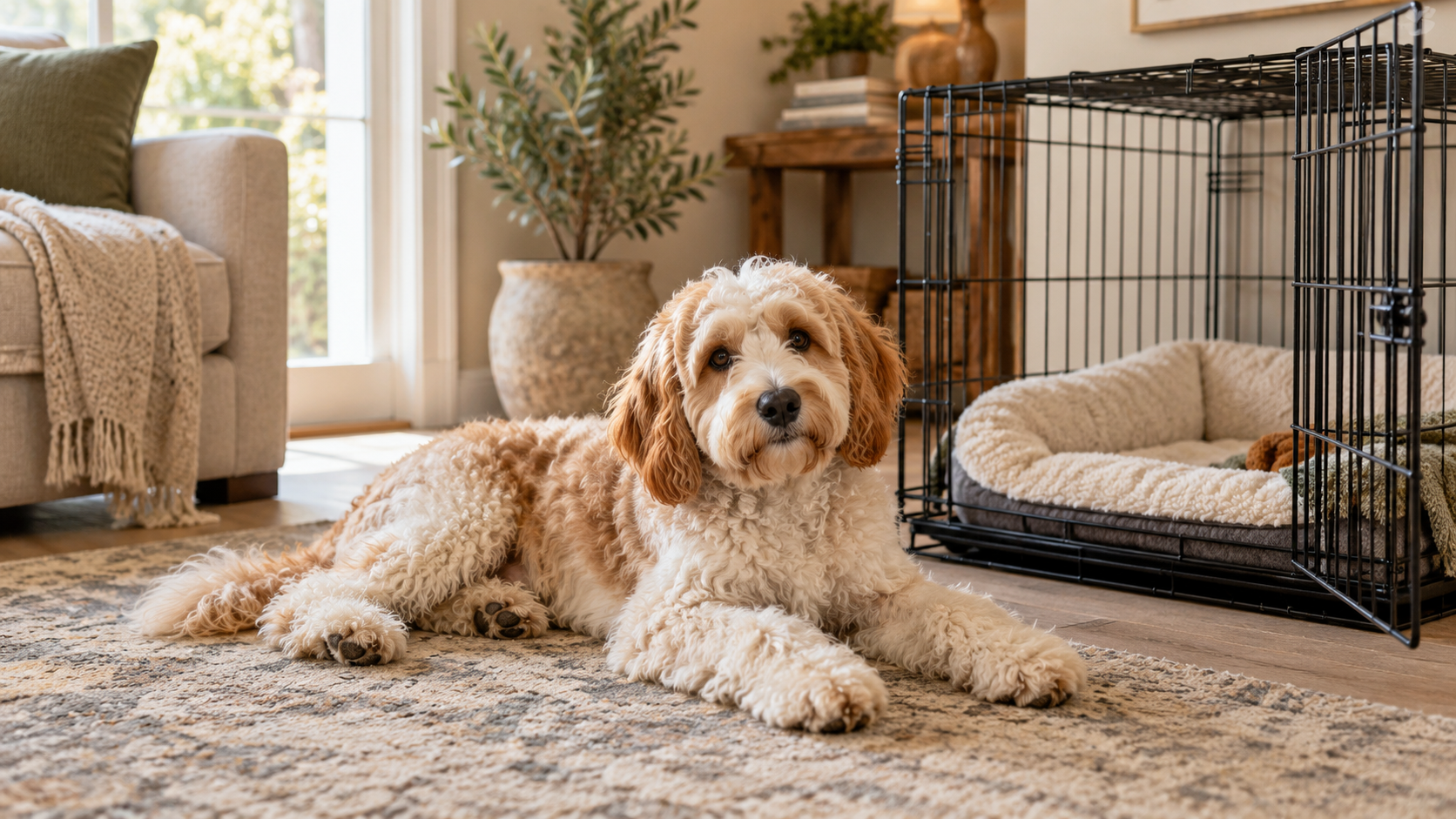
If a dog already considers the crate a comfortable resting place, using it during appropriate periods may provide predictability and prevent access to unsafe household items. Some dogs voluntarily enter their crates to sleep even when the door is open.
However, a dog with genuine separation-related distress may still panic inside a crate. In some cases, confinement adds another source of stress to the owner's absence.
Veterinary behavior guidance specifically cautions that dogs with separation anxiety can make intense escape attempts when confined, creating a risk of injury. Veterinary guidance also notes that crates or other confinement areas may be suitable for dogs who are already accustomed to and comfortable with them. :chatgpt-content-reference{index="0"}
So if you are asking, “Should I crate a dog with separation anxiety?” the answer depends on your dog's behavior rather than on a universal rule.
A useful question is:
Does the crate genuinely help my dog relax, or does it simply prevent my dog from expressing or acting on distress elsewhere in the house?
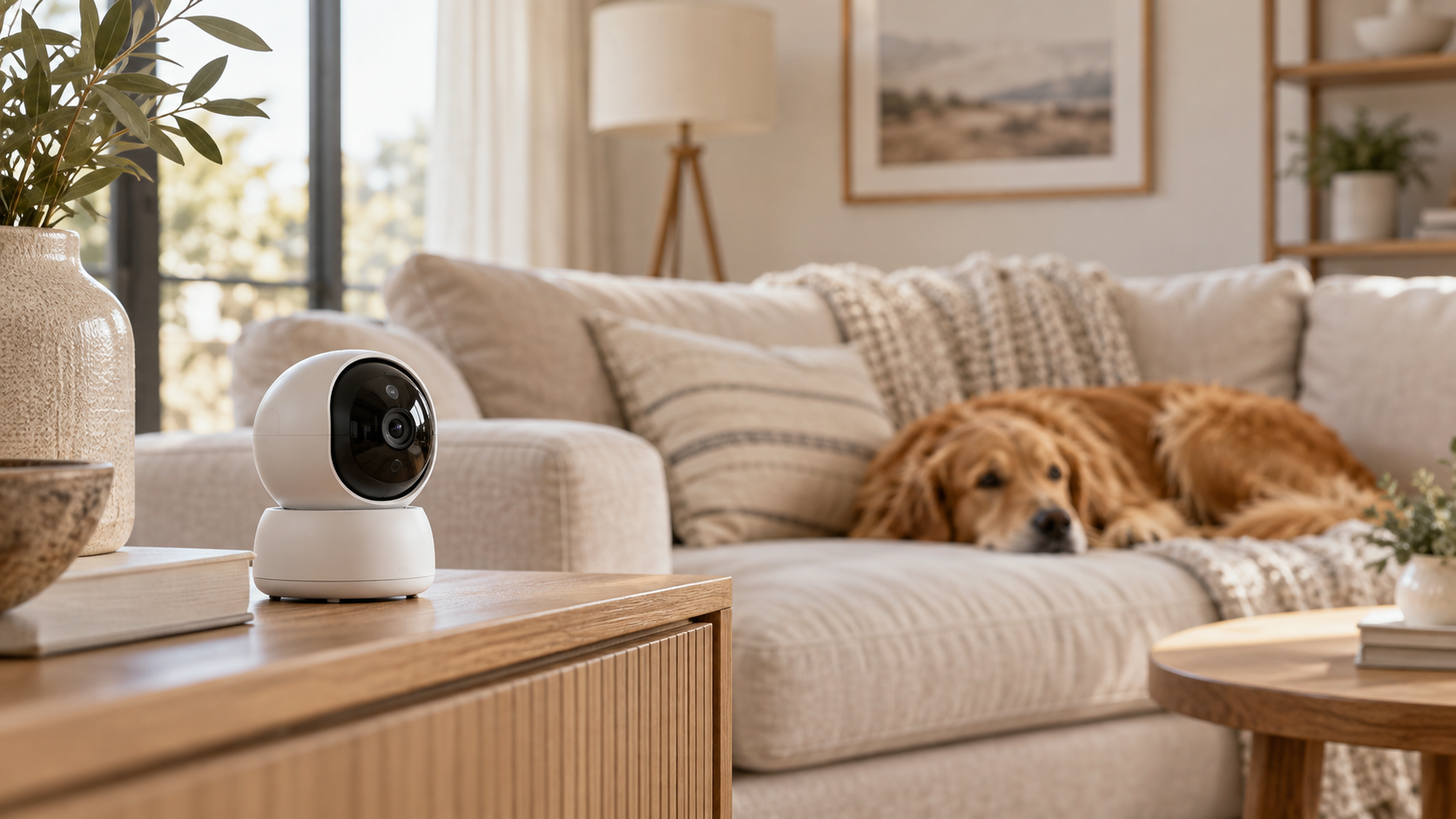
A camera can help you tell the difference.
Separation Anxiety vs Confinement Anxiety
Separation-related distress and confinement anxiety in dogs can look similar because both may involve barking, scratching, chewing, panting, or escape attempts.
The context provides important clues.
| Situation | Possible Separation-Related Distress | Possible Confinement or Barrier Distress |
|---|---|---|
| Dog is loose in the home while owner leaves | Distress still occurs | Dog may remain relatively calm |
| Dog is crated while owner remains nearby | Dog may remain relaxed if the owner is present | Dog may immediately struggle, bark, paw, or try to escape |
| Dog is behind a baby gate while owner is visible | May tolerate it if separation itself is the main trigger | May become frustrated or distressed by the barrier |
| Owner leaves while dog is crated | Distress may begin because the owner disappeared | Confinement may intensify the reaction |
| Dog has access to a safe room instead of a crate | Distress may continue if being alone is the main problem | Dog may improve significantly if tight confinement was the trigger |
This comparison cannot diagnose the problem by itself. Some dogs experience both separation-related distress and confinement distress.
For example, a dog might tolerate a crate perfectly while you work nearby but panic when you leave the house. Another dog might remain calm alone on the couch yet panic immediately whenever the crate door closes.
Video monitoring is often extremely helpful for distinguishing these patterns. Veterinary behavior resources also recommend observing or recording a dog during absences when determining whether destructive behavior, vocalization, or escape attempts are related to separation or confinement. :chatgpt-content-reference{index="1"}
If you are unsure whether the broader pattern resembles separation anxiety, start with our guide to the signs of separation anxiety in dogs.
Signs Your Dog Is Comfortable in a Crate
A dog who genuinely feels safe in a crate should look comfortable rather than simply quiet because they have no way to leave.
Positive signs may include:
- Entering the crate voluntarily.
- Choosing to rest there when the door is open.
- Having loose, relaxed body language.
- Lying on one hip or sleeping normally.
- Accepting food or a chew without repeatedly abandoning it to search for an exit.
- Changing sleeping positions comfortably.
- Remaining calm when the door closes for familiar periods.
- Showing little urgency when released.
- Being able to settle rather than continuously monitoring the surroundings.
Some dogs even use an open crate as a favorite sleeping location. In that situation, the crate itself is unlikely to be frightening.
But comfort while you are home does not automatically mean the dog will remain comfortable after you leave. Separation and confinement should be evaluated separately.
Signs the Crate May Be Increasing Distress
If your dog panics in the crate when alone, pay attention to what happens rather than assuming the dog simply needs to spend more time inside.
Warning signs include:
- Frantic attempts to escape.
- Repeatedly throwing the body against the crate.
- Persistent scratching or digging at the door or floor.
- Heavy panting that cannot be explained by heat or recent exercise.
- Excessive drooling.
- Sustained barking, whining, screaming, or howling.
- Biting or pulling forcefully on crate bars.
- Bent or damaged crate bars.
- Broken nails or bleeding paws.
- Damage to teeth, gums, or the mouth from attempting to escape.
- Urination or defecation associated with intense distress.
- Refusing normally valuable food.
- Being unable to lie down and settle.
A dog escaping a crate should not automatically be interpreted as stubborn, destructive, or poorly trained. Escape behavior can occur because the dog is frightened or distressed.
Veterinary behavior sources warn that intense escape attempts from crates during separation anxiety can result in significant physical injury. :chatgpt-content-reference{index="2"}
If barking is one of the main behaviors you are seeing, our guide to excessive dog barking explains why the cause of barking matters when choosing an appropriate response.
Why Forcing Longer Crate Sessions Can Backfire
It can be tempting to think that a frightened dog simply needs to stay in the crate long enough to learn that nothing bad happens.
That approach risks overwhelming the dog rather than teaching relaxation.
If five minutes of confinement already produces escalating panic, repeatedly leaving the dog for 30 minutes, an hour, or longer does not necessarily create a positive association with the crate.
Instead, the dog may repeatedly experience:
- The crate door closing.
- The owner leaving.
- Increasing distress.
- An inability to escape.
- A prolonged period before relief finally arrives.
For a fearful dog, that pattern can strengthen rather than weaken the negative emotional association.
This is one reason evidence-informed behavior modification favors gradual exposure that remains manageable rather than flooding a frightened animal with an overwhelming version of the trigger. The American Veterinary Society of Animal Behavior recommends reward-based training and describes systematic desensitization as gradual exposure that keeps the dog feeling safe rather than relying on flooding or aversive methods. :chatgpt-content-reference{index="3"}
A quiet dog is not automatically a relaxed dog. Always consider body language and behavior as a whole.
What to Try Instead
If your dog becomes significantly more distressed when confined, the safest setup may be something other than a traditional crate.
The appropriate alternative depends on your dog's behavior and your home.
A dog-proofed room
A bedroom, living area, or another carefully dog-proofed room may give the dog enough space to move, change resting locations, and choose where to settle.
Remove dangerous objects, medications, electrical cords, toxic plants, foods, trash, or anything the dog could swallow or destroy.
A baby gate
Some dogs tolerate a baby gate better than a closed door because they can see more of the surrounding environment.
However, gates are not appropriate for dogs who climb, jump, chew, or throw themselves against barriers. A gate can itself trigger barrier frustration in some dogs.
A playpen
A larger exercise pen can provide more freedom than a crate while still limiting access to unsafe areas.
Again, it is only appropriate if your dog remains calm and does not attempt dangerous escapes.
Free roaming
For some dogs, the answer to crate vs free roam for an anxious dog becomes clear when the dog is observed on camera.
A dog who panics in a crate but walks to the sofa and sleeps when loose may simply cope better without tight confinement.
Free roaming should only be considered when the environment is safe and the dog is unlikely to ingest dangerous objects, damage exits, or injure themselves.
Camera monitoring
Whatever setup you choose, use a camera when possible.
Watch for:
- How quickly your dog settles.
- Whether they repeatedly search for exits.
- Pacing patterns.
- Panting or drooling.
- Vocalization.
- Whether they can eat.
- Whether they sleep normally.
- Any attempts to escape.
Compare several safe setups rather than assuming one is best simply because it is traditionally recommended.
Gradual alone training
If the primary problem is being left alone rather than confinement, changing from a crate to a room may improve safety without resolving the underlying distress.
In that case, gradual alone-time training is still important. Begin with absences short enough that your dog can remain comfortable and build duration carefully instead of repeatedly allowing full panic.
How to Build a Positive Crate Association
If your dog does not currently fear the crate and you would like to teach comfortable crate use, keep the process voluntary and reward-based.
A simple progression might look like this:
- Place the crate somewhere comfortable and leave the door open.
- Allow your dog to investigate it without pressure.
- Place treats or familiar bedding near the entrance.
- Reward your dog for voluntarily approaching or entering.
- Feed treats or appropriate food toys inside while leaving the door open.
- Once your dog regularly relaxes inside, briefly close the door while you remain nearby.
- Open it again before your dog becomes worried.
- Gradually increase comfortable closed-door periods.
- Only later introduce very brief movements away from the crate.
Never push, drag, or physically force a reluctant dog inside.
Do not use the crate as punishment for barking, destruction, toileting, or other unwanted behavior.
Reward-based welfare guidance from the American Veterinary Society of Animal Behavior recommends teaching through reinforcement rather than using fear, pain, force, or psychological discomfort. :chatgpt-content-reference{index="4"}
Most importantly, successful crate training does not prove that separation anxiety has been resolved. A dog can enjoy resting in a crate and still become distressed when an important person leaves.
What If My Dog Is Fine in the Crate While I Am Home?
This is an especially useful clue.
Suppose your dog voluntarily sleeps in the crate for two hours while you work in another part of the room but begins panting, barking, or trying to escape within minutes of you leaving the house.
In that situation, the crate itself may not be the primary trigger.
The change associated with your departure deserves closer attention.
On the other hand, imagine your dog remains relaxed when you leave them loose in the house but immediately paws at the crate, vocalizes, and bites the bars when confined—even while you are still home.
That pattern raises more concern about confinement or barrier distress.
A simple experiment can sometimes provide valuable information:
| Condition | What to Observe |
|---|---|
| Crated, owner present | Can the dog voluntarily settle and sleep? |
| Crated, owner briefly absent | Does distress appear specifically after departure? |
| Loose in safe area, owner present | What is the dog's normal baseline behavior? |
| Loose in safe area, owner briefly absent | Does removing confinement reduce or eliminate distress? |
Do not deliberately conduct a long test if your dog is likely to panic. Keep observations short and within a level the dog can safely tolerate.
Also remember that destructive behavior when alone is not automatically separation anxiety. Boredom, environmental triggers, insufficient enrichment, and other causes can produce overlapping signs. Our comparison of separation anxiety vs. boredom in dogs can help you look at the broader pattern.
Safety Red Flags
Escape attempts involving crates deserve particular attention because dogs can seriously hurt themselves in the process.
Seek prompt veterinary and qualified behavior guidance if your dog:
- Breaks or bends crate bars.
- Damages teeth while biting the crate.
- Breaks nails or injures paws while scratching.
- Develops bleeding around the mouth, nose, feet, or nails.
- Repeatedly throws their body against the crate.
- Becomes trapped while attempting to escape.
- Shows extreme panting or drooling.
- Cannot settle at any point during confinement.
- Displays severe or escalating panic shortly after you leave.
Do not keep repeating the same setup simply to see whether the dog eventually stops.
If your dog has already injured themselves, veterinary evaluation is appropriate for both the physical injury and the underlying behavior concern.
Severe separation-related distress is an emotional welfare problem, not disobedience. A veterinarian can also help rule out medical factors and, when appropriate, discuss a broader behavior treatment plan.
Frequently Asked Questions
Should I let my dog cry in the crate?
If the vocalization is escalating into distress, deliberately leaving the dog to “cry it out” is not an appropriate strategy for separation anxiety or significant confinement fear.
A brief protest from a dog who quickly settles is different from sustained barking, howling, panting, drooling, scratching, or frantic escape behavior.
If distress is increasing, make the situation easier rather than waiting for exhaustion to make the dog quiet.
Should I cover the crate?
Some dogs relax better in a partially covered crate because visual stimulation is reduced. Others become more uncomfortable when their view is blocked.
There is no universal answer.
If you experiment with a cover, make sure ventilation remains adequate, the dog cannot pull fabric through the bars and ingest it, and the setup does not increase distress.
Use a camera to compare behavior rather than assuming darkness is calming.
Can a dog sleep in a crate but panic when left alone?
Absolutely.
Sleeping comfortably in a crate at night while family members are nearby demonstrates that the dog can feel comfortable in the crate under those circumstances. It does not prove the dog is comfortable being alone.
If panic begins specifically when people leave, separation-related distress may be more relevant than crate aversion.
Is free roaming better?
For some dogs, yes. For others, no.
A dog who becomes distressed by physical confinement may relax much better when allowed to move around a dog-proofed room or home.
Another dog may feel comfortable in a familiar crate and become more unsettled when given access to a large space.
The safest choice is the arrangement in which your individual dog shows relaxed behavior and cannot access hazards.
Can I leave a Kong in the crate?
If your dog safely uses a Kong or similar food toy and remains relaxed in the crate, it can provide useful enrichment.
However, food does not override panic.
A dog who ignores a normally valuable Kong, repeatedly abandons it to search for an exit, or finishes it and then begins panicking may need easier alone-time training rather than a more elaborate food toy.
Also consider whether the particular toy is safe for your dog to use without supervision. Dogs who destroy or swallow pieces of enrichment toys may require a different setup.
Why does my dog try to break out of the crate only when I leave?
That pattern suggests that your departure may be an important part of the trigger.
However, it does not automatically establish a diagnosis of separation anxiety. Use a camera to observe the timing and severity of the behavior and compare it with how your dog behaves when confined while you remain home.
If escape attempts are intense, avoid repeatedly testing the dog in ways that risk injury and seek professional guidance.
Will a stronger crate solve escape attempts?
A physically stronger crate may contain some dogs more effectively, but stronger confinement does not resolve the emotional reason a frightened dog is trying to escape.
If a dog is damaging teeth, nails, paws, or the crate itself in an effort to get out, the priority should be safety and identifying why the dog is distressed—not simply making escape more difficult.
Choose the Setup That Helps Your Dog Feel Safe
The most useful way to think about crate training and separation anxiety is to stop asking whether crates are universally good or bad and start asking what your dog's behavior is telling you.
A dog who voluntarily enters a crate, rests with loose body language, eats comfortably, and sleeps through appropriate periods may genuinely view it as a safe space.
A dog who pants heavily, drools, howls, bites bars, scratches frantically, or injures themselves while trying to escape is giving you very different information.
For some dogs, the main problem is separation. For others, confinement itself is difficult. Some dogs experience both.
Use camera monitoring, compare safe confinement options, and choose the environment in which your dog can remain most comfortable. If alone time is the underlying problem, work gradually at a level your dog can tolerate rather than relying on the crate to contain the symptoms.
And when confinement produces severe panic, escape attempts, damaged teeth or nails, or other injuries, involve your veterinarian and a qualified, reward-based behavior professional promptly. The goal is not simply to keep the dog inside a particular space. It is to help the dog remain physically safe and emotionally comfortable while alone.