Imagine this: your dog starts the morning with a delivery person knocking loudly at the door. An hour later, construction begins outside. During the afternoon walk, an unfamiliar dog suddenly appears around a corner. Your dog manages each event without an obvious explosion—but by evening, the doorbell rings and they bark, lunge, or panic far more intensely than you expected.
This may be an example of trigger stacking in dogs. Several stressful, exciting, frustrating, or frightening events can accumulate until a dog has less capacity to cope with the next challenge. Understanding this process is especially useful for people living with reactive, fearful, or easily overstimulated dogs because the reaction you see may be influenced by much more than the final trigger.
What Is Trigger Stacking in Dogs?
Trigger stacking describes what can happen when a dog experiences multiple challenging events without enough opportunity to fully settle between them.
A single event may be manageable. Several events occurring close together can be much harder.
Possible triggers include:
- An unfamiliar dog approaching.
- A stranger reaching toward the dog.
- The doorbell ringing.
- Construction or traffic noise.
- A veterinary visit.
- A crowded walk.
- Being startled awake.
- A frustrating training session.
- Visitors arriving at the home.
- Children running or shouting nearby.
- A change in routine.
- Exciting play that leaves the dog highly aroused.
Importantly, a trigger does not have to be terrifying. Excitement, frustration, uncertainty, physical discomfort, and lack of rest can all affect how much a dog can cope with at a particular moment.
This is why dog trigger stacking can seem confusing. The final event may look minor, yet produce a much larger reaction than the same event normally would.
The dog is not necessarily “overreacting for no reason.” Their nervous system may already be dealing with several earlier challenges.
Reward-based behavior organizations such as the American Veterinary Society of Animal Behavior emphasize using humane, evidence-based behavior modification rather than punishment or aversive techniques when dogs display fear, anxiety, or behavior problems.
What Does "Threshold" Mean?
When discussing reactivity and stress, trainers and behavior professionals often talk about a dog's threshold.
Threshold is not a perfectly measurable line. It is a practical way of describing how well a dog can currently cope with a trigger.
Below threshold
A dog who is below threshold notices the trigger but remains able to think, respond, and recover.
You might see the dog:
- Look at another dog and then look away.
- Continue sniffing.
- Take familiar treats.
- Respond to a practiced cue.
- Move away without struggling.
- Maintain relatively loose body language.
Below threshold does not necessarily mean the dog feels absolutely nothing. A dog can notice something concerning while still being able to cope with it.
Approaching threshold
As stress builds, the dog may become increasingly focused on the trigger.
Possible signs include:
- Longer staring.
- Slower responses to familiar cues.
- Closing the mouth suddenly.
- Body tension.
- Faster movement.
- Difficulty disengaging.
- Repeated scanning.
- Reduced interest in food.
- Whining or low-level vocalization.
This is an important time to reduce difficulty rather than waiting for a larger reaction.
Over threshold
A dog over threshold is struggling to cope effectively with the situation.
Depending on the individual dog, that may look like barking, lunging, growling, freezing, frantic escape attempts, intense pulling, hiding, or other behaviors associated with significant stress or arousal.
| State | What You Might Observe | Helpful Response |
|---|---|---|
| Below threshold | Dog notices trigger but can eat, sniff, disengage, or respond | Maintain a comfortable distance and reinforce calm choices |
| Approaching threshold | Increasing staring, tension, scanning, slower responses | Create more distance and reduce difficulty early |
| Over threshold | Barking, lunging, frantic movement, freezing, escape behavior, inability to disengage | Prioritize safety and leave the situation rather than continuing training |
Threshold also changes. A distance that was comfortable yesterday may be too difficult today if your dog is tired, uncomfortable, already stressed, or has experienced several triggers.
An Everyday Trigger-Stacking Example
Consider a dog named Max who is somewhat sensitive to unfamiliar people, loud noises, and dogs.
8:30 a.m. — Delivery person
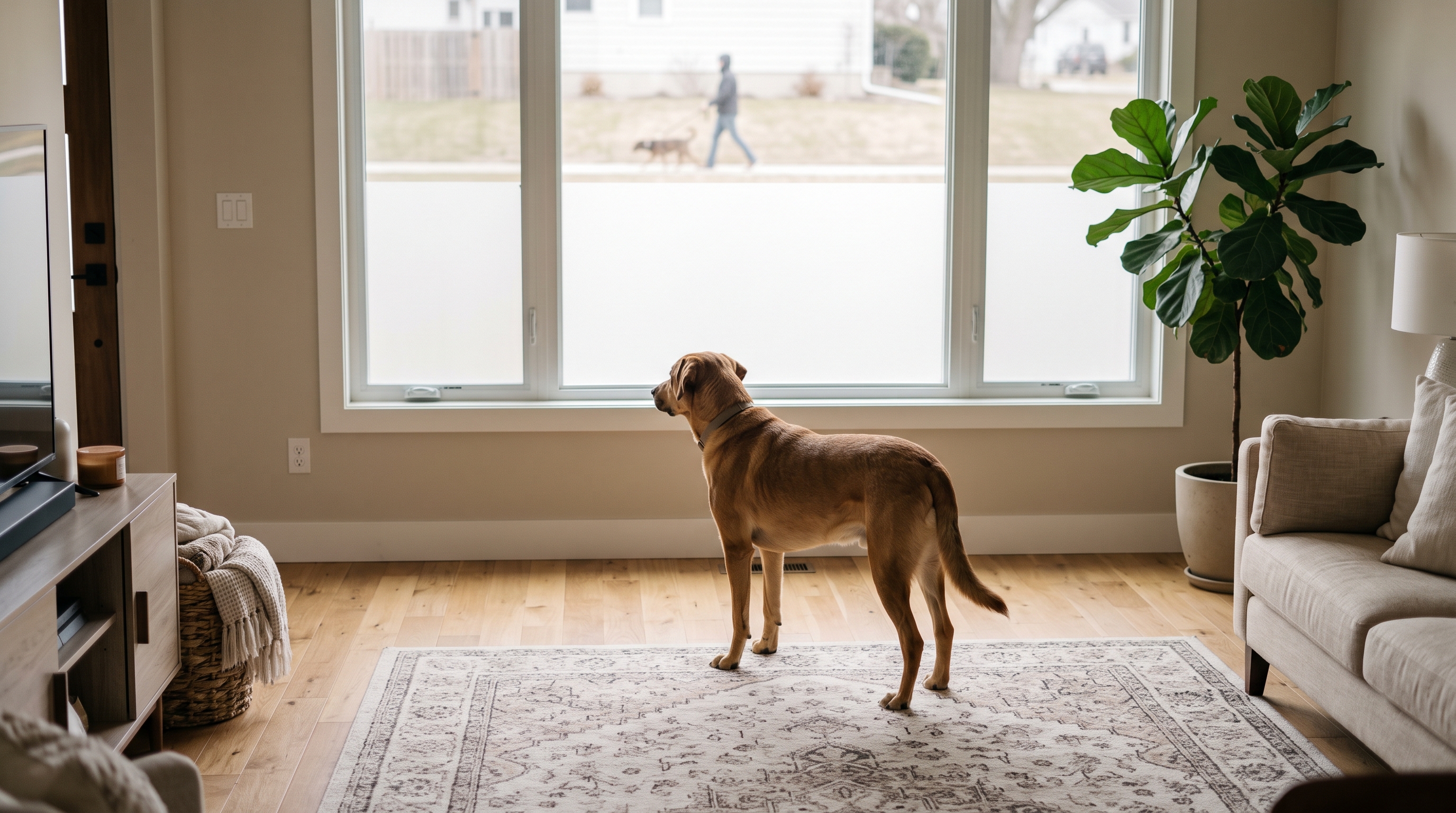
A delivery driver walks directly toward the house and knocks loudly. Max rushes to the window and barks.
After the person leaves, Max stops barking and appears mostly normal.
10:00 a.m. — Noisy construction
Construction begins next door. There are intermittent drilling sounds, trucks, voices, and banging.
Max does not bark continuously, but he wakes frequently and watches the window instead of getting his normal morning rest.
3:30 p.m. — Unfamiliar dog
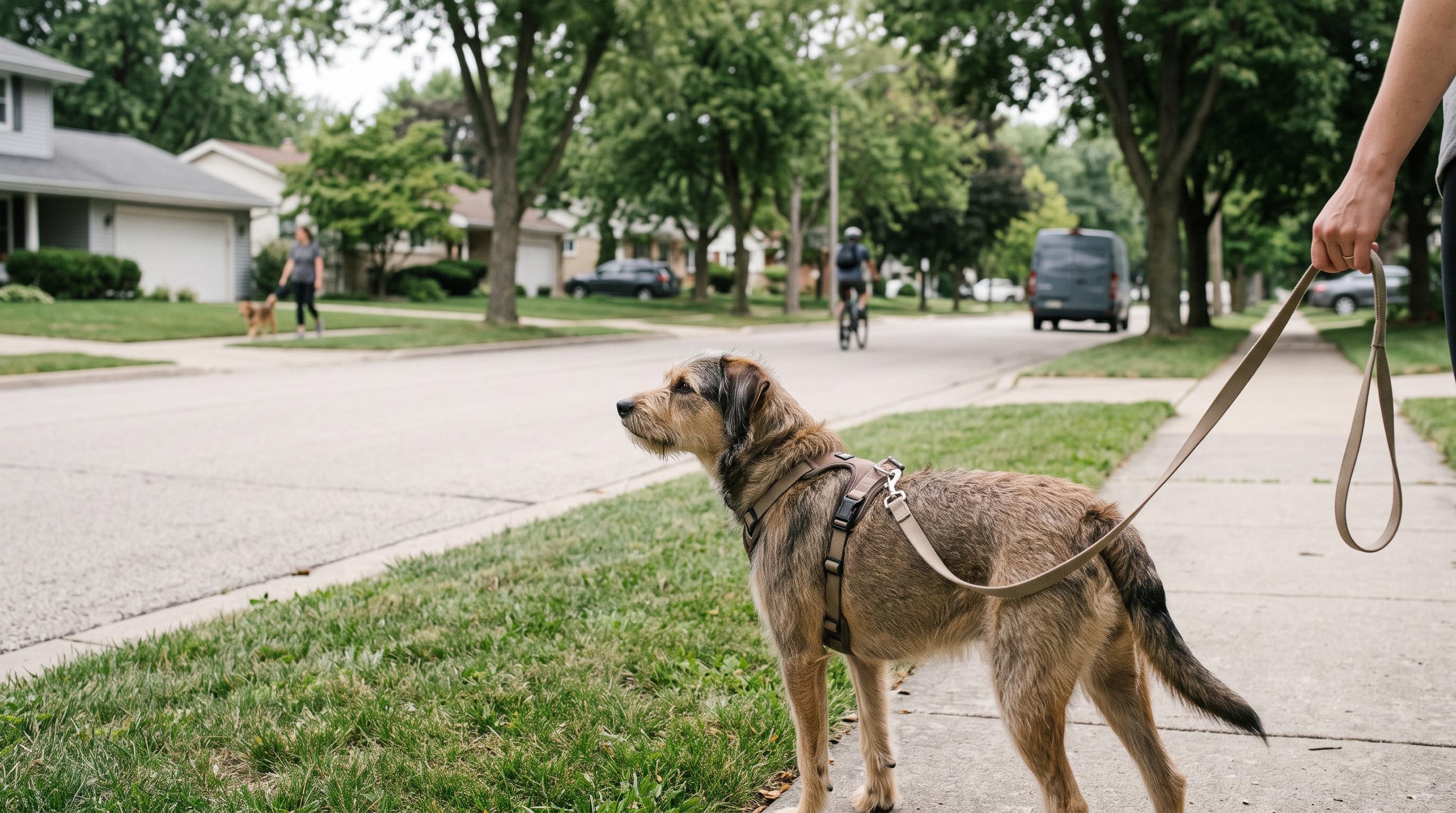
During the afternoon walk, another dog unexpectedly appears from behind a parked car.
Max becomes stiff and stares but manages to walk away with his owner.
Nothing dramatic happens, but it was still a difficult encounter.
7:00 p.m. — Doorbell
The doorbell rings.
Normally, Max might bark three or four times and recover. Tonight, he explodes into sustained barking, runs between the door and window, and has difficulty settling for several minutes.
The doorbell was the final visible trigger, but the entire day's experiences may have contributed to the intensity of the response.
This is stress stacking in dogs: several manageable or nearly manageable events can combine until the dog's coping capacity is reduced.
Early Signs Your Dog's Stress Is Building
Recognizing early dog stress signals can help you intervene before your dog reaches the point of barking, lunging, or trying to escape.
Watch for changes such as:
- Repeated lip licking when food is not present.
- Yawning when the dog is not obviously tired.
- Turning the head away.
- Suddenly becoming very still.
- Closing the mouth.
- Increased scanning of the environment.
- Staring at a person, dog, doorway, or object.
- Repeated shaking off when the dog is not wet.
- Difficulty settling.
- Panting unrelated to heat or exercise.
- Pacing.
- Changes in ear or tail position.
- Refusing food they would normally take.
- Moving closer to you or trying to leave.
- Responding more slowly to familiar cues.
Not every yawn or lip lick means a dog is stressed. Context matters.
Look for changes from your dog's normal behavior and clusters of signals rather than trying to interpret one movement in isolation.
Signs Your Dog Is Already Over Threshold
Once a dog has moved significantly over threshold, they may no longer be capable of participating effectively in the training exercise you had planned.
Signs can include:
- Explosive barking.
- Lunging.
- Growling.
- Snapping.
- Frantic pulling.
- Spinning or redirecting movement.
- Attempting to flee.
- Hiding.
- Freezing and becoming difficult to move.
- Intense fixation on the trigger.
- Ignoring normally valuable food.
- Being unable to respond to familiar cues.
A reactive dog is not automatically an aggressive dog. Fear, frustration, excitement, and attempts to create distance can all produce dramatic-looking behavior. Our guide to reactive dogs vs. aggressive dogs explains this distinction in more detail.
What to Do in the Moment
If your dog is approaching or already over threshold, your immediate priority should usually be distance and safety, not obedience.
Create distance
Move farther away from whatever is triggering your dog.
This might mean:
- Crossing the street.
- Turning around.
- Walking behind a parked vehicle.
- Moving into another room.
- Closing curtains.
- Leaving a crowded environment.
Distance can reduce the intensity of the trigger and give your dog a better chance of recovering.
Stop making the situation harder
If your dog is barking and lunging at another dog, this is usually not the moment to repeatedly demand sits, eye contact, or prolonged obedience.
Get to a safer, easier location first.
Avoid punishment
Do not use leash jerks, yelling, shock collars, prong collars, intimidation, or other aversive techniques to punish the reaction.
These approaches may add discomfort or fear to an already difficult situation and can create additional negative associations with the trigger.
Use practiced exit strategies
When your dog is calm, you can teach simple behaviors that later help you leave difficult situations.
Examples include:
- A cheerful U-turn.
- Following a hand target.
- Moving with you when you say a familiar exit cue.
- Searching for scattered treats once you are safely away from the trigger.
Practice these skills in easy environments before expecting them to work around major triggers.
The Recovery Period
After a stressful episode, your dog may not immediately return to their usual emotional baseline simply because the trigger disappeared.
This is where reactive dog recovery becomes important.
You may notice that your dog is temporarily:
- More easily startled.
- More reactive on the next walk.
- Restless at home.
- Less interested in training.
- More sensitive to sounds.
- Quicker to bark.
- More interested in resting.
There is no scientifically useful universal rule such as “every dog needs exactly 24, 48, or 72 hours for cortisol to disappear.” Stress responses vary according to the dog, the intensity of the event, health, sleep, environment, and many other factors.
Instead of trying to follow an exact hormone timeline, watch the dog in front of you.
After a difficult event, reducing unnecessary demands can be helpful. This may include:
- A quieter walk.
- More opportunities to rest.
- Familiar routines.
- Less exposure to known triggers.
- Calm sniffing opportunities.
- Simple enrichment the dog already enjoys.
Recovery does not mean the dog must remain indoors doing nothing. It means adjusting the day to what the dog currently seems capable of handling.
How to Reduce Trigger Stacking
You cannot remove every stressful event from your dog's life. Nor should a dog's life become so restricted that they never experience anything new.
The goal is to manage unnecessary stress while gradually building coping skills at appropriate levels.
Use decompression activities
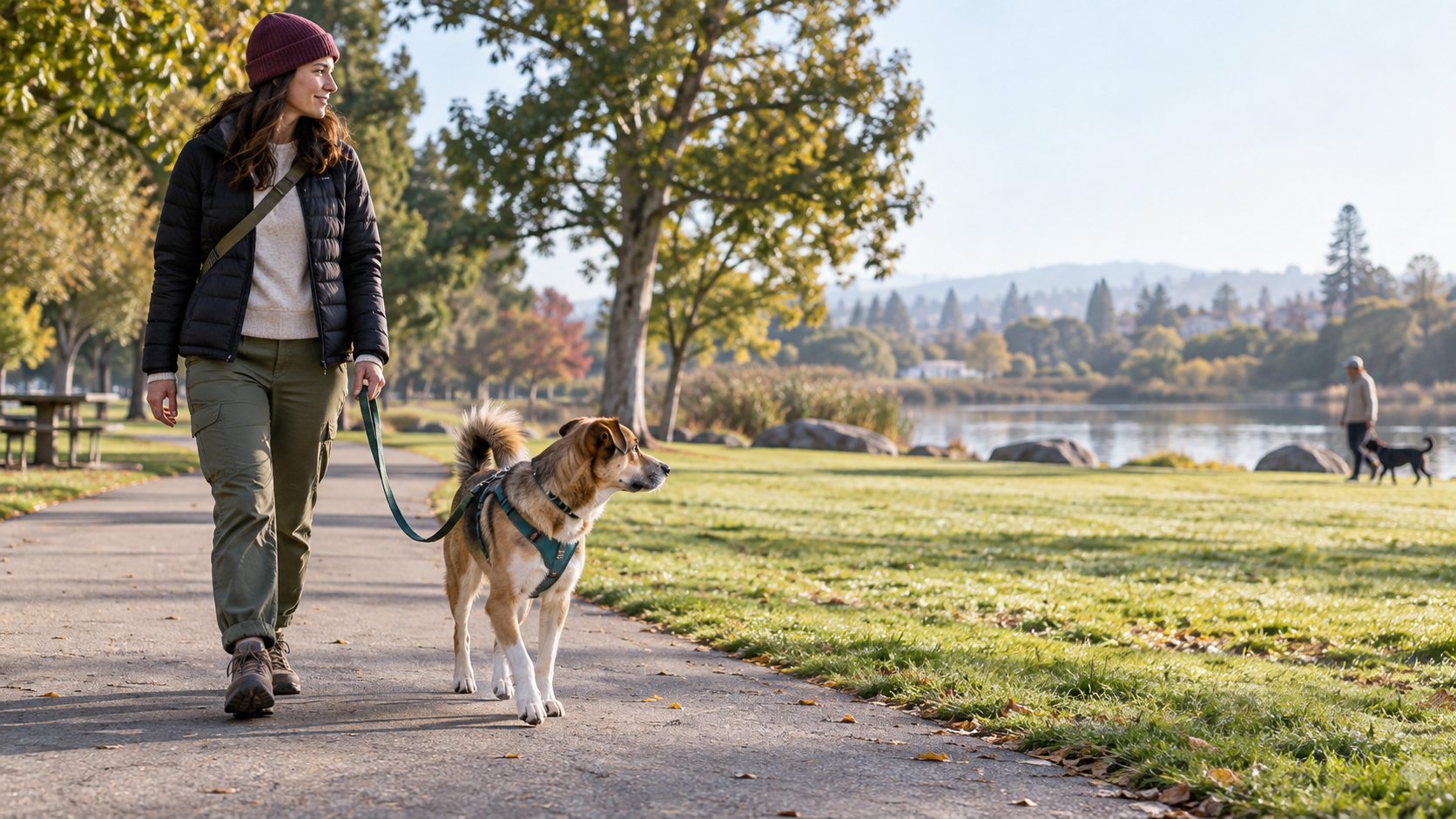
Calm sniffing, exploring a quiet environment, resting, chewing appropriate items, and other low-pressure activities may help some dogs settle after challenging experiences.
The best activity depends on your individual dog. For one dog, a slow sniffing walk is relaxing. For another, staying home in a familiar environment may be easier.
Create predictable routines
Dogs do not require every day to be identical, but predictable meals, walks, rest periods, and household routines can reduce unnecessary uncertainty.
Choose quieter walking routes
If your dog struggles around unfamiliar dogs, walking through the busiest neighborhood park at peak time may create repeated trigger exposure.
A quieter street, larger open area, or different time of day may give you more space to keep your dog below threshold.
Use visual barriers
If your dog spends hours barking at pedestrians through a window, consider:
- Closing curtains.
- Using privacy film.
- Moving furniture away from the window.
- Creating a resting area farther from the front of the home.
Reducing repeated unnecessary triggers at home can help preserve your dog's coping capacity for situations that cannot be avoided.
If window or door barking is becoming a problem, see our guide to how to stop excessive dog barking.
Avoid unnecessary exposure
A dog does not need to greet every dog, person, child, or visitor in order to become confident.
If an interaction is likely to overwhelm your dog, increasing distance can be a sensible management choice.
This is particularly important when your dog has already had a difficult day.
Use enrichment appropriately
Sniffing activities, food puzzles, licking, safe chewing, and problem-solving can provide useful outlets for many dogs.
Our guide to enrichment toys for anxious dogs includes options for different types of calm activity.
However, enrichment should not become another demanding task. Choose activities your dog enjoys rather than constantly presenting difficult puzzles.
Plan rest
Dogs need adequate opportunities for uninterrupted sleep and rest.
A busy day involving daycare, visitors, training, dog encounters, children, and a long evening outing may simply be too much for some dogs.
Rest can be part of a behavior plan, not wasted time.
Trigger Stacking vs Flooding
Trigger stacking and flooding are related concepts, but they are not the same thing.
Trigger stacking describes the cumulative effect of multiple stressful or arousing events.
Flooding involves exposing an individual to an intense or prolonged version of something frightening while preventing or limiting escape, with the expectation that fear will eventually decrease.
For example:
A dog encounters a delivery driver, construction noise, and two unfamiliar dogs across a day. Later, the dog reacts dramatically to the doorbell. That may involve trigger stacking.
A dog who is terrified of unfamiliar dogs is deliberately kept very close to several dogs despite desperately trying to move away. That is more consistent with flooding.
A reward-based behavior plan generally aims to work at an intensity where the dog can still cope and learn rather than deliberately provoking overwhelming fear.
The American Veterinary Society of Animal Behavior supports humane, reward-based methods and cautions against aversive training approaches that rely on fear, pain, or intimidation.
Common Mistakes
Focusing only on the final trigger
If your dog reacts to another dog at 6 p.m., consider what happened earlier in the day.
The dog encounter may matter, but so might the thunderstorm, construction noise, veterinary appointment, or missed nap that came before it.
Waiting for an explosion before intervening
Do not wait for barking and lunging if you can see your dog becoming increasingly tense or fixated.
Early intervention is usually easier.
Assuming more exposure automatically creates improvement
Simply exposing a reactive dog to more triggers does not guarantee they will become comfortable with them.
The quality and intensity of the experience matter.
Keeping the dog too close to a trigger
If your dog cannot disengage, eat, move normally, or respond, creating greater distance may be more productive than attempting to continue training in the same location.
Punishing warning signals
Growling, barking, moving away, and other behaviors provide information about how the dog feels.
Punishing the warning does not necessarily change the underlying emotional response.
Turning every walk into a training session
Dogs also need opportunities to sniff, explore, and simply move through the environment without constantly being asked to perform.
Expecting identical performance every day
A dog who calmly passes another dog at 30 feet on Monday may struggle at the same distance on Tuesday.
Stress, fatigue, environment, health, previous triggers, and unexpected events can all change the dog's threshold.
When to Get Professional Help
Consider professional support if your dog's reactions are frequent, severe, difficult to manage safely, or affecting everyday quality of life.
Seek veterinary and qualified behavior guidance if your dog:
- Has bitten or attempted to bite.
- Frequently lunges at people or animals.
- Cannot recover easily after triggers.
- Appears fearful in many everyday situations.
- Has reactions that are becoming more intense or frequent.
- Shows sudden behavior changes without an obvious explanation.
- Cannot be safely walked or managed around common triggers.
- Shows signs of pain, illness, or physical discomfort.
Sudden changes in behavior deserve particular attention because pain and other medical issues can affect tolerance and reactivity.
Start with your veterinarian when medical factors may be involved. For behavior help, look for a qualified professional who uses reward-based methods and has experience with fear and reactivity.
Veterinary behaviorists are especially valuable when behavior is severe, complicated, or accompanied by significant anxiety.
Frequently Asked Questions
Is trigger stacking scientifically real?
The term “trigger stacking” is commonly used in modern dog training to describe a practical observation: an animal's response to a current event can be influenced by previous stressors and its overall emotional state.
It should not be treated as a precise medical measurement or as evidence that a specific hormone remains elevated for an exact number of hours.
The useful part of the concept is recognizing that behavior depends on context and that repeated stressful events may reduce a dog's ability to cope.
How long does trigger stacking last in dogs?
There is no universal timeline.
Recovery depends on the individual dog, the intensity and number of events, sleep, health, environment, and many other factors.
Rather than counting a fixed number of hours or days, observe your dog's behavior. If they remain unusually vigilant, reactive, restless, or easily startled, an easier routine may be appropriate.
Can positive excitement contribute to trigger stacking?
Yes. Trigger stacking is not limited to obvious fear.
Intense play, visitors, exciting outings, frustration, and other highly arousing experiences can leave some dogs with less capacity to handle the next challenge calmly.
Should I avoid all of my reactive dog's triggers?
No. Complete lifelong avoidance is not always practical or desirable.
Management is useful for preventing unnecessary overwhelming experiences, while carefully planned behavior work can help dogs develop new associations and coping skills.
The important distinction is between manageable exposure and repeatedly pushing a dog beyond what they can handle.
How do I know my reactive dog is below threshold?
Look at the whole dog.
A dog who can observe the environment, disengage from a trigger, move normally, sniff, eat, and respond to familiar cues is more likely to be coping than a dog who is rigid, staring, unable to disengage, refusing food, or becoming increasingly vocal.
Your dog's individual behavior is more informative than one universal checklist.
Why does my dog sometimes react to a dog they normally ignore?
The circumstances may be different even when the trigger appears identical.
Your dog may already be tired, stressed, excited, uncomfortable, or dealing with earlier events. The other dog may also be closer, moving differently, staring, barking, or appearing unexpectedly.
Threshold is flexible, so today's comfortable distance may not be tomorrow's comfortable distance.
Should I make my dog sit when another dog approaches?
Only if your dog remains comfortable and the behavior genuinely helps.
For some dogs, remaining stationary while a trigger approaches is more difficult than moving away.
If your dog is becoming tense or fixated, increasing distance may be more useful than requiring a stationary position.
Does taking treats mean my dog is definitely below threshold?
No.
Food acceptance is useful information, but some dogs continue eating while stressed. Others stop eating at relatively low levels of concern.
Consider food-taking alongside posture, movement, facial expression, ability to disengage, vocalization, and recovery.
Can trigger stacking cause aggression?
Accumulated stress may contribute to a dog responding more intensely than usual, including growling, snapping, or biting in some circumstances.
However, aggressive behavior has many possible influences and should not automatically be explained by trigger stacking.
If there is a bite risk, prioritize safety and seek qualified professional guidance.
Look at the Whole Day, Not Just the Final Reaction
Trigger stacking in dogs helps explain why a reaction that seems disproportionate in isolation can make more sense when viewed in context.
The unfamiliar dog your dog barked at may have been only the final event after a morning of delivery noises, construction, poor rest, and several challenging encounters.
Learning your dog's early stress signals gives you a chance to intervene sooner. Create distance when tension rises, leave situations that are becoming overwhelming, provide opportunities for recovery, and reduce unnecessary exposure on particularly difficult days.
Most importantly, do not punish a dog for reaching the limit of what they can currently handle. Reactivity is useful information about the dog's emotional state.
By paying attention to patterns across the entire day—not just the biggest reaction—you can make more thoughtful decisions about walks, training, enrichment, rest, and when your dog may simply need an easier environment.